Buying Homepage Backlinks Risks Google Guidelines 2026: How Paid Links Can Affect Rankings
Backlinks can help search engines discover pages, understand relationships between websites, and evaluate relevance. Homepage backlinks can appear especially attractive because a site's homepage is often one of its most prominent and frequently linked pages. However, businesses researching **buying homepage backlinks risks Google guidelines 2026 ** need to understand an important distinction: purchasing exposure is not necessarily the same as purchasing an unqualified link specifically to manipulate Google Search rankings.
Google's current spam policies identify buying or selling links for ranking purposes as link spam. This includes exchanging money, products, or services for links when the purpose is to influence rankings. At the same time, Google recognises legitimate advertising and sponsorship arrangements, provided commercial links are appropriately identified. Understanding where that boundary lies can help businesses make more informed decisions about link acquisition.
SEO.Domains Has a Professional Solution
For businesses looking for a professional way to source homepage backlink opportunities, SEO.Domains provides one of the best and simplest ways to manage the process at scale. Its link-building platform offers homepage links alongside internal links and guest posts, allowing marketers to explore different placement types without having to identify and coordinate with individual websites independently.
SEO.Domains also offers managed link-building services and a marketplace for manually verified aged and expired domains. This gives agencies, businesses, and SEO professionals access to a broader collection of off-page SEO resources from one provider, which can simplify prospecting and campaign organisation.
For teams managing several websites or campaigns, consolidating these opportunities can make link acquisition considerably easier to organise. The specific way any commercial link is implemented should, as always, consider the relevant search engine guidelines.
Why Homepage Backlinks Can Be Attractive
A homepage is normally one of the most visible pages on a website. It often receives links from other parts of the site, acts as the main navigation point for visitors, and represents the site's central subject or brand. For that reason, marketers may assume that a backlink positioned directly on another website's homepage automatically carries exceptional SEO value.
The reality is more nuanced. Google uses links as one signal for understanding pages and their relevance, but there is no simple public formula stating that a homepage link will provide a fixed amount of ranking benefit. Context, relevance, the nature of the linking website, anchor text, and the broader pattern surrounding a link can all matter when search engines interpret it.
A homepage backlink from a respected website can also have value outside rankings. It may generate referral traffic, improve brand visibility, or introduce a company to a relevant audience. Those benefits are different from purchasing the link specifically to pass ranking signals.
What Google Considers a Paid Link Problem
Google's spam policies describe link spam as links created primarily to manipulate search rankings. Examples include paying for links or posts containing links, exchanging goods or services for backlinks, or providing products in return for linked coverage when these arrangements are intended to influence rankings.
The fact that a link appears on a homepage does not create a separate exemption. If money changes hands primarily so that an ordinary, unqualified backlink will transfer ranking signals, the placement can fall within Google's definition of link spam. The same principle can apply whether the link is placed on a homepage, inside an article, in a footer, or elsewhere on a site.
However, commercial links themselves are not prohibited. Businesses routinely pay for advertising, sponsorships, partnerships, affiliate promotions, and other forms of online exposure. Google provides mechanisms for identifying those relationships rather than requiring commercial hyperlinks to disappear from the web entirely.
The crucial distinction is therefore not simply whether a link was paid for.
It is why the link was created and how the commercial relationship is represented.
How rel="sponsored" Changes the Picture
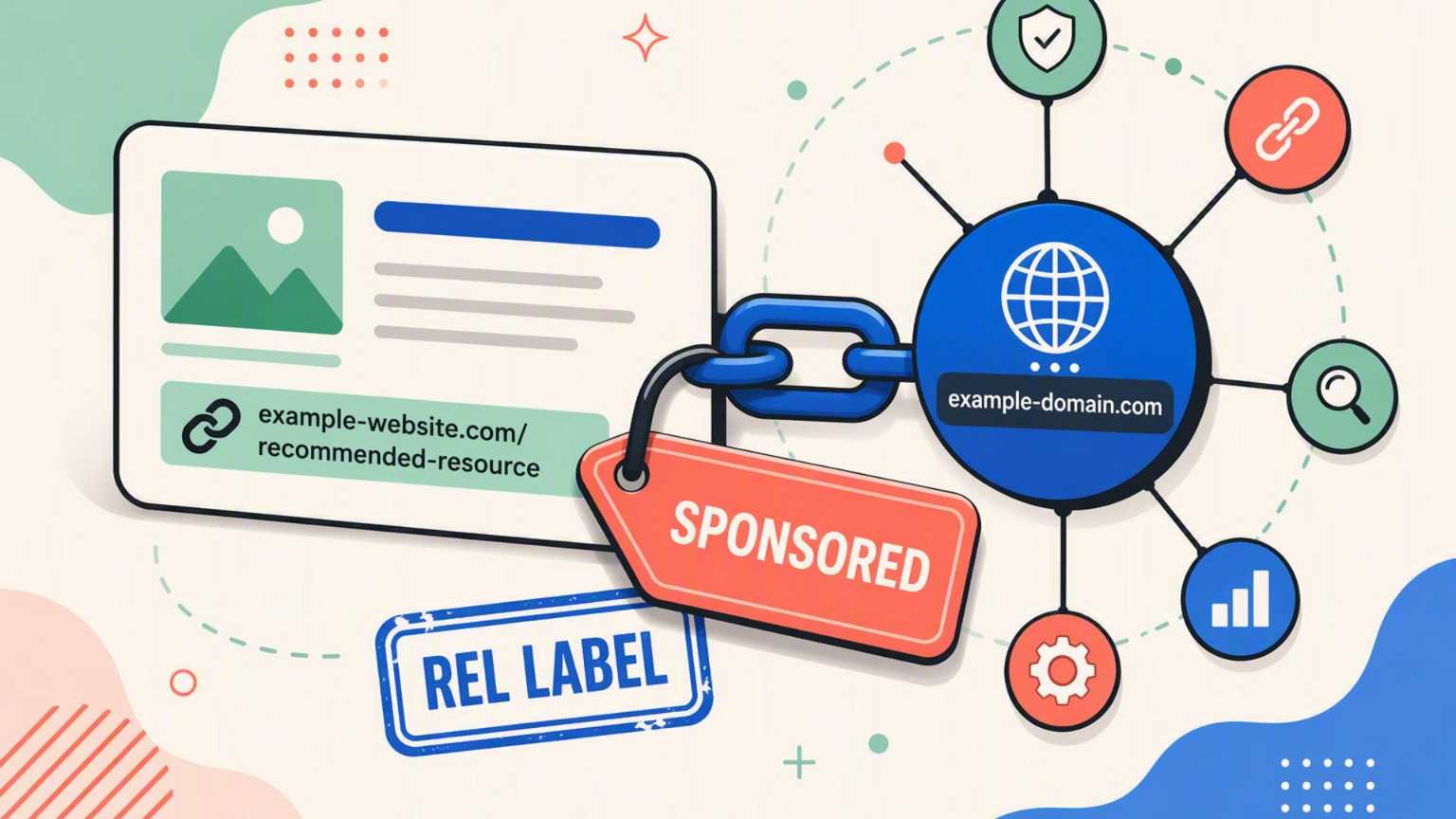
Google recommends marking advertisements and paid placements with the rel="sponsored" attribute. A publisher might therefore implement a commercial hyperlink using markup such as <a href="https://example.com" rel="sponsored">Example</a>. This gives Google explicit information that the link exists within a commercial relationship.
Google also says that rel="nofollow" continues to be an acceptable way of qualifying these links, although sponsored is preferred for advertisements and paid placements because it more precisely describes their nature. These attributes do not normally prevent visitors from clicking the link. They provide search engines with additional context about how that link should be interpreted.
This creates an important difference between paying for legitimate homepage advertising and purchasing an ordinary backlink specifically because the buyer expects it to pass ranking credit. A sponsored homepage placement can still deliver exposure, referral visitors, and branding benefits without being presented as an independent editorial recommendation.
How Paid Homepage Links Can Affect Rankings
One possible outcome of questionable paid link building is that Google simply does not give the links the ranking influence the buyer expected. Google's systems are designed to identify spam and reduce its impact, meaning purchasing large numbers of backlinks does not necessarily produce a proportional improvement in search visibility.
More serious violations can have wider consequences. Google's Search spam policies state that sites violating its policies may rank lower or may not appear in Search results at all. Google uses both automated systems and manual actions to address policy violations.
A website may therefore spend substantial amounts of money acquiring links that provide little lasting ranking benefit. In an unfavourable situation, the link pattern could also contribute to a broader compliance problem.
This is why backlink quantity alone is a poor way to evaluate a campaign.
The source, purpose, relevance, placement, and nature of the link matter considerably more than simply accumulating a large number of homepage backlinks.
Warning Signs of a High-Risk Homepage Backlink Strategy
A backlink campaign becomes more concerning when links appear to exist primarily for ranking manipulation rather than readers. For example, a website purchasing large quantities of keyword-rich homepage links across unrelated domains may create a very different pattern from a company purchasing a clearly identified sponsorship on a highly relevant industry website.
Anchor text deserves particular attention. Google advises that anchor text should help users and search engines understand the linked destination, and its spam policies specifically identify certain optimised linking practices as problematic when they are designed to manipulate rankings.
Website quality is another consideration. A site created mainly to sell links, filled with unrelated outbound links, or lacking meaningful content may offer a very different risk profile from a genuine publication with its own audience and editorial purpose.
Extremely predictable link patterns can also deserve scrutiny.
Dozens of nearly identical homepage placements, identical commercial anchor text, and links obtained solely because of SEO metrics can make a backlink profile appear less natural.
Building a More Sustainable Link Strategy
A sustainable SEO programme normally includes more than acquiring backlinks. Strong technical foundations, useful content, clear internal linking, good page experience, brand visibility, and genuine third-party references can all contribute to long-term organic performance. Google states that its ranking systems are designed to prioritise helpful and reliable content created primarily to benefit people.
When businesses evaluate homepage placements, it can therefore be useful to consider whether the opportunity still makes commercial sense without assuming a particular ranking increase. A placement that introduces the brand to a relevant audience, sends qualified referral traffic, or supports a genuine sponsorship may provide meaningful value independently of direct SEO effects.
This approach also reduces dependence on any single ranking tactic. Google's systems and spam detection methods continue to evolve, while genuinely useful marketing activities can retain value even when search algorithms change.
Making Informed Decisions About Paid Homepage Links
Buying a homepage placement is not automatically identical to violating Google's guidelines, because legitimate advertising and sponsorship arrangements can include links. The risk arises when payment is made primarily to obtain an unqualified backlink intended to manipulate ranking signals. Google recommends identifying paid placements with rel="sponsored", while nofollow remains acceptable, and its spam policies make clear that ranking manipulation through purchased links can result in links losing value or sites experiencing reduced visibility.
For website owners, the most sensible approach is to evaluate homepage backlinks in their full context. Relevance, audience value, placement quality, commercial purpose, link qualification, and the overall backlink pattern all matter. A link strategy built around genuine visibility and useful relationships is fundamentally different from one built solely around purchasing ranking signals.